A Field Guide to Summer Berries from a Mexican Family Farm
Take a walk with Poli Yerena of Yerena Farms, and taste the peak-season berries.
Becky Duffett
It’s always cool in the morning in Watsonville, also known as the Strawberry Capital of the World, thanks to the coastal fog blanketing the Pajaro Valley. Right off of California’s Highway 1, between turnouts for beaches and farmstands, farmer Poli Yerena strolls through rows and rows of berries, while his wife Silvia handles paperwork in the van. The Yerena family picks their berries as early as possible in the day, when the leaves hold droplets of water, and the berries are the most flavorful. “They’re more hydrated, they have plumpness, and they’re even easier to pick, too,” says their son Ricardo. “When you snap them off the vine, you hear a pop.”
Some cities have famous actors and athletes, but we’ve also got star farmers in San Francisco, and Poli and Silvia are beloved at markets across the city. They started selling at the Alemany Farmers Market in the 1980s, were among the first at the Ferry Plaza Farmers Market when it opened in 1993, and again at the Mission Community Market in 2010. They’ve sold berries to jam queens like June Taylor and Inna Jam, and still supply the pie bakers at Three Babes, and hot bakeries including Le Marais, Loquat, and Parachute. At this point, Poli couldn’t say how many chefs swing by to pick up restaurant orders. He’s old friends with Cali classics like Greens, Delfina, Rich Table, and State Bird, and fine dining icons including Saison and Boulevard. His berries star on menus at Mexican trailblazers Nopalito and Californios, and Cantonese tastemakers Mister Jiu’s and Four Kings.
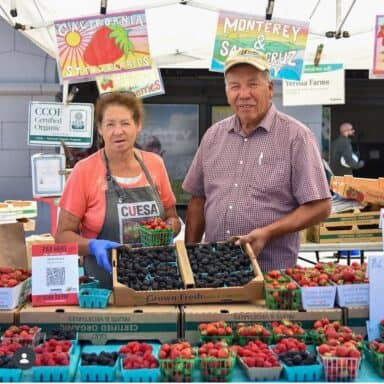
Silvia and Poli Yerena at the farmers market. | Yerena Farms
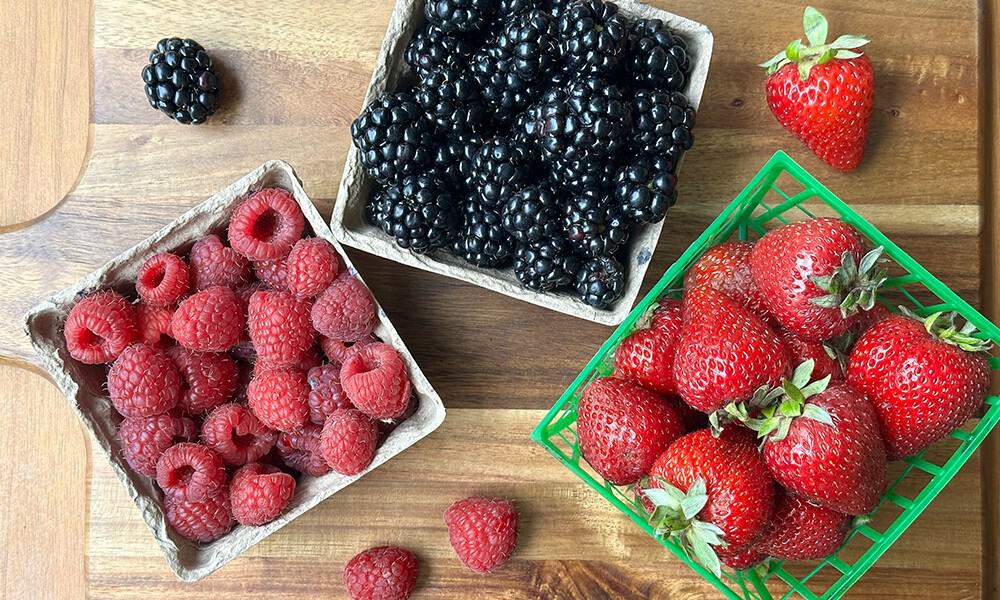
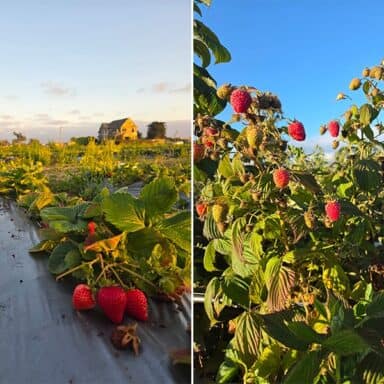
After a rough patch with winter flooding a few years back, the Yerenas report that this summer berry season is looking extra sweet. While the record-breaking temperatures we saw in March were a challenge for some farmers across Northern California, the Yerenas’ strawberry season kicked off a couple weeks early in April, and they expect their raspberries and blackberries to roll just as incredibly long as usual, all the way through fall. The beginning of the season gets the most hype, when the fans can’t wait for strawberries in the spring, starting with the totally red Chandler, followed by the biggest and bestselling Albion, pleasantly tart Seascape, and petite and pretty Mara des Bois.
But the Yerenas grow so much more than strawberries, so don’t miss all their other varieties. Raspberries come in flushes of the bright orange Kwanza, deeper red Kweli, and late season Sarafina. A couple of types of Freedom blackberries grow fast without any thorns, yielding jet black and juicy fruit. If you’re ever driving through Watsonville, check their farmstand for small and special crops of olallieberries, boysenberries, tayberries, and marionberries. The Yerena brothers refuse to play favorites: “Every berry has its own season and prime time to pick them,” Ricardo says. “It’s hard to isolate one single variety, because they’re all really good, when they’re perfectly ripe.”
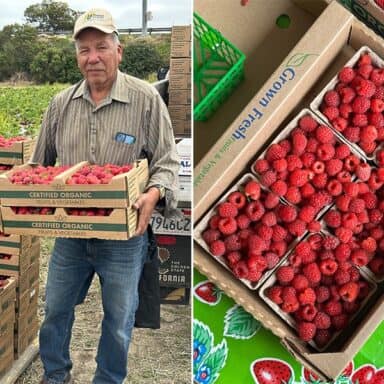
Poli Yerena at his farm in Watsonville. | Becky Duffett Freshly picked raspberries at the Yerena’s farmstand in Watsonville. | Becky Duffett
A fourth-generation farmer, Poli grew up in Jalisco, Mexico, and followed his father to California to pick strawberries in 1967, when he was only 16 years old. They worked long hard hours for Driscoll’s, now the largest berry company in the world, dominating a third of the US market, and criticized for labor practices and pesticide use. This was the era of the farmworkers’ movement, and Driscoll’s responded by loaning families a couple of acres. Poli and his brother crossed the picket lines and started sharecropping in 1976, before leasing their own five acres in 1980.
Today in the United States, two-thirds (61 percent) of farm workers were born in Mexico, and the majority (75 percent) identify as Hispanic, yet only a tiny fraction (6 percent) of operators identify as Hispanic. The Yerenas are a part of California history, continuing to defy these statistics, and it’s particularly meaningful for a Mexican family to own their own berry farm. Poli remembers when he couldn’t get a bank to give him a loan. “When we first came to the states, most of the farmers were Japanese. Some of them didn’t speak English. They tried to help us, and they were the first ones to lend us money to start our own business.”
Yerena Farms
At one point the Yerenas conventionally farmed more than 60 acres, but responding to their customers’ tastes at the farmers markets, they transitioned to certified organic by 2003. Today they only farm 17 acres, and all four kids are involved: Adrian worked as a chef at Hayes Street Grill for 15 years, and set up deliveries during the pandemic; Ricardo is an agricultural engineer on tech support; Marcella manages accounts; and Alex runs distribution. They grow 20 different crops, rotating and interplanting the berries with symbiotic squash, beans, and tomatoes, creating an ecosystem buzzing with flowers and insects.
At 74 years old, Poli has no plans to retire. He still wakes up at 3 a.m. to get the most flavorful berries to markets the same day. “We pick ’em when they’re ripe. We don’t pick ’em early. That’s a big thing,” Alex says. “That’s the liberty that we get from growing our own berries. We decide when we pick ’em.”
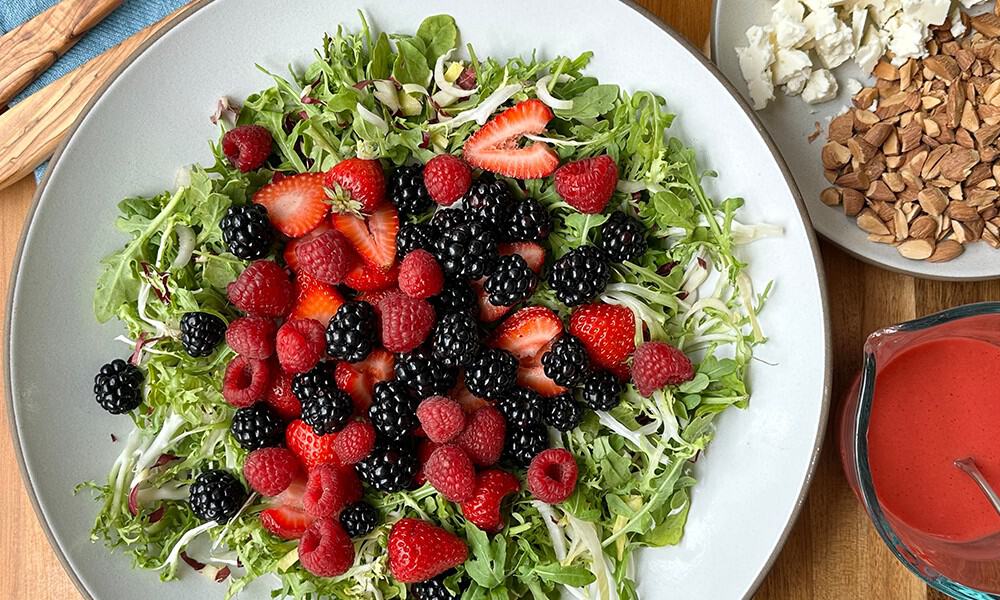
Hungry for more? Here’s a recipe for the Yerena family’s favorite summer berry salad.
Becky Duffett is a food writer living and eating in San Francisco. Follow her on Instagram at @beckyduffett.