Why It’s Always Worth Eating Traceable and Regenerative Beef
Beef prices keep rising, and the president is bringing in cheap imports. But here’s why we still love working with small ranchers.
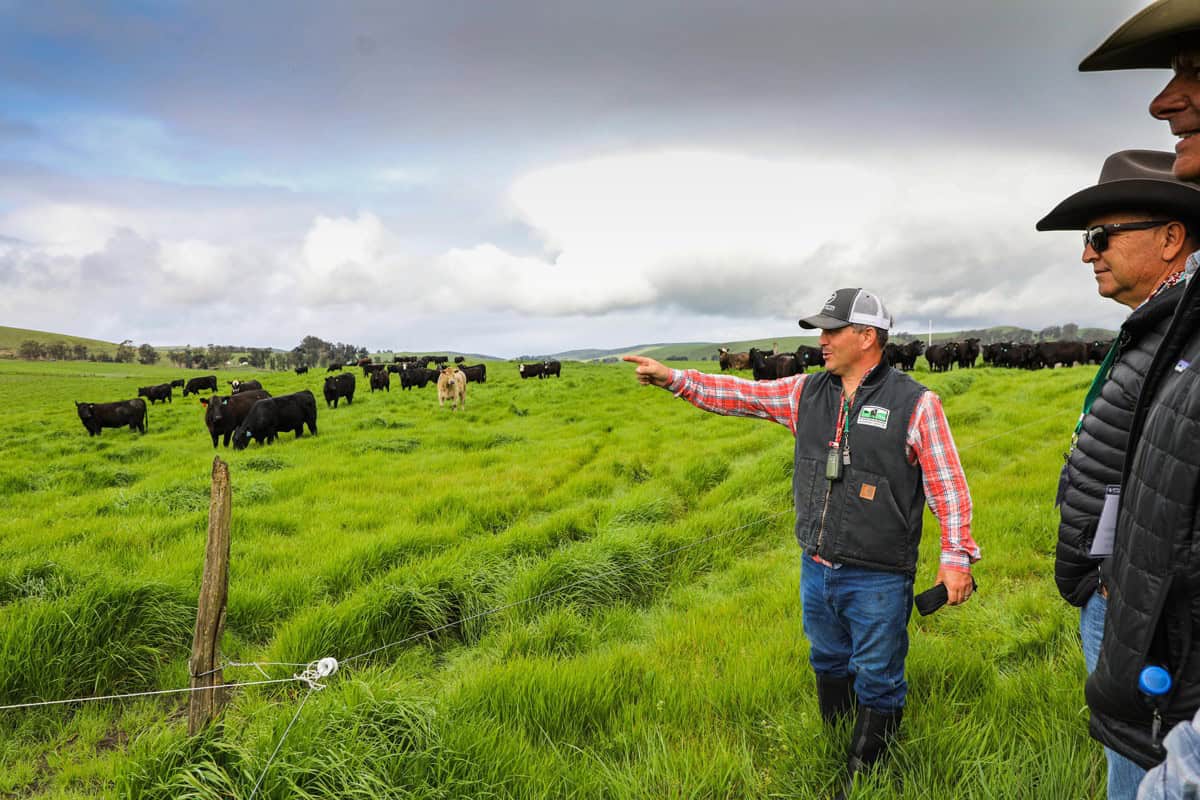
Stemple Creek Ranch
By Becky Duffett
There’s been some big beef in national news this season. Across the country, the price of beef keeps going up, hitting 6 percent higher in August than last year, per the USDA. In response, President Donald Trump is waiving tariffs on beef, and bringing in cheap imports. Specifically, he’s allowing 300,000 metric tons (661 million pounds) of lean beef trimmings, an ingredient mixed into ground beef, starting on September 1 for a period of 90 days. The goal, the president said, is to sell these trimmings at a discounted price up to 25 percent below market rates.
Thus far, this policy has succeeded in upsetting American ranchers. The National Cattlemen’s Beef Association responded with disappointment, along with senators from Nebraska, Montana, and other agricultural states. Ranchers are already facing challenges, including drought and high costs for fuel and fertilizer, and the size of the herd in the US is the lowest it’s been in 75 years. Meanwhile, it’s not clear how much savings has been passed along to consumers. Vox Media reports that most of this ground beef may go to fast food, rather than grocery shelves, where it might only take two cents off a pound.
Locally here in San Francisco and the Bay Area, this proclamation has little to do with the kinds of family-owned ranches who we love to feature at Bi-Rite Markets. “It’s a short-term fix that’s targeted to help the majority of large beef packers in America, right?” says Cliff Pollard of Cream Co. Meats, the butcher and distributor based in Oakland. “It’s not targeted to help the small rancher, or the regional supply chain. It’s targeted to push down the national price of ground beef.” But regardless, it’s a great reminder why we love supporting traceable and regenerative ranches. Because don’t you want to know where your beef comes from? Let’s dig into it.
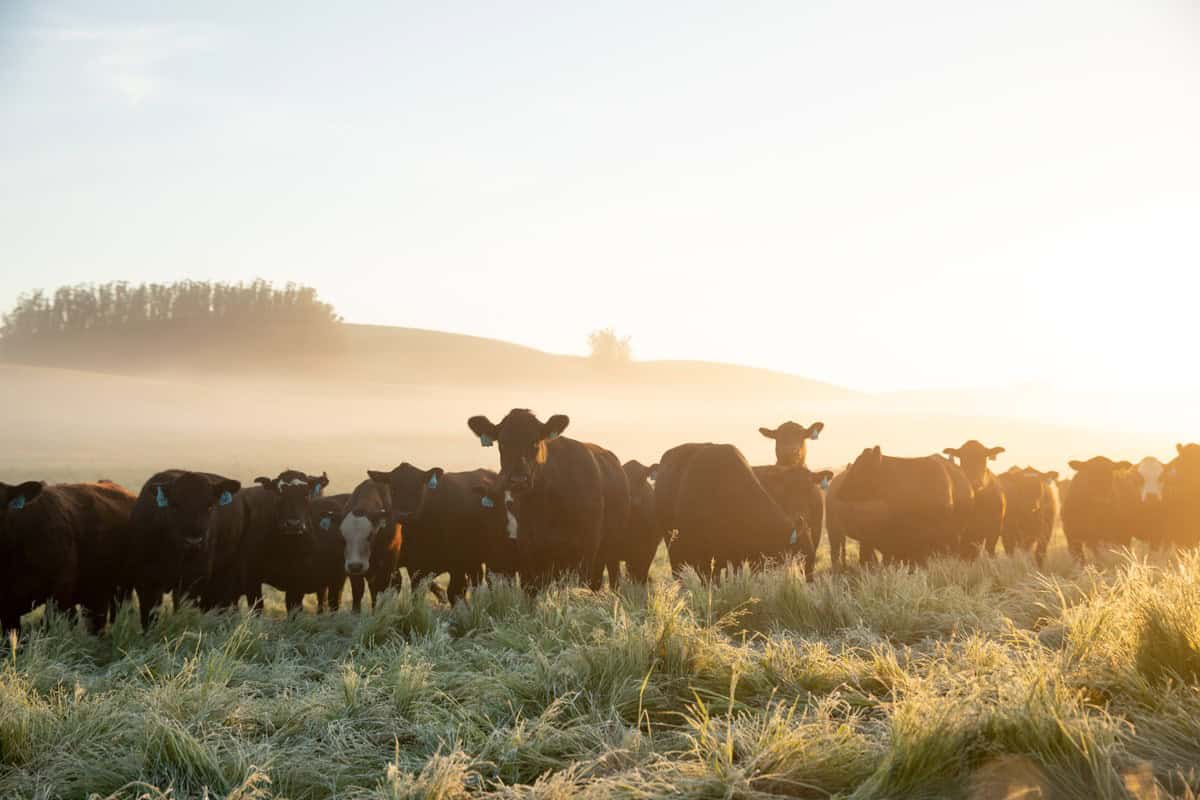
Cattle grazing at Stemple Creek Ranch in Marin County | Paige Green
Mystery Meat vs. Traceable Beef
Here’s what to know about cheap imports, according to Pollard. It’s not clear where they’re coming from — the president mentioned Argentina, and Brazil is another major supplier, but “there’s a huge lack of transparency.” Of course, those are countries with rich ranching histories and traditions, but for these trimmings to be this cheap, and it’s not clear what the standards are for this set of ranches, Pollard explains. Lean beef trimmings typically get shipped by ocean freight, increasing their carbon footprint by 6,000 miles.Once they reach the US, they’re mixed with other meat. Currently, there is no requirement to list the country of origin (that might change, but not until next year). So at the time of writing, “It’s commodity beef. This is bottom-of-the-barrel beef, with no provenance, no claims, no guarantees,” Pollard says.
Suffice it to say, we don’t carry this kind of meat at Bi-Rite Markets. “Traceability is a big thing for our beef program,” says meat category manager Chili Montes. “And access to having an educated conversation with a rancher, and being able to just pick up the phone, there’s so much value in that.” Montes knows exactly where your beef is coming from, currently across Northern California and up into the Pacific Northwest. (Although he isn’t necessarily opposed to importing, and even partnered with a specific ranch in Uruguay a few years ago, because of their practices and quality.) He chats with ranchers about their practices, in terms of how they treat their animals and land, and drives out to visit green pastures. Beyond labels like organic, natural, and grass-fed (only organic is a strict certification), he asks if the cattle have been raised with no antibiotics. And above all, whether they’re working toward regenerative ranching, which is the deeper issue if you care about climate change.
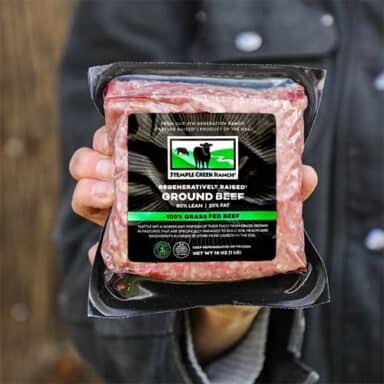
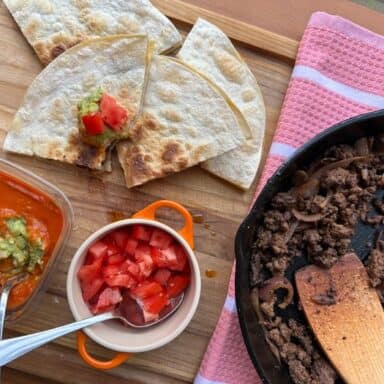
Ground beef from Stemple Creek Ranch | Paige Green
One Prime Local Example
It’s especially expensive to run cattle in Northern California, so we feel extra lucky to work with Stemple Creek Ranch in Marin County, who are truly local at only an hour and a half north of San Francisco. Rancher Loren Poncia represents the fourth generation of this Italian-American family farm. “You can come to the ranch anytime to meet us and see the cattle,” Poncia says. Most of their animals were born and raised on their ranch, and eat grass every day of their lives. They practice rotational grazing, focusing on the health of the soil, and supporting a full ecosystem of buzzing birds and insects. And they’re tackling climate change, by sinking carbon down into their soil, and offsetting greenhouse gas emissions. You can taste the difference — if you’ve ever bitten into the iconic burger at Zuni Cafe, you can savor that earthy and lush terroir.
Ground beef from Stemple Creek Ranch | Paige Green
Right now, the national average for a pound of ground beef is $6.92, while a pound from Stemple Creek weighs in at nearly double the price. This is not news to Poncia, who has plenty of experience with getting undercut by conventional and commodity meat. But he does wish that every time you reach for a pound of ground beef at the grocery store, you could clearly see where that meat comes from, and how those animals were raised. “It’s your choice where you buy your beef from … ” Poncia says. “But we want it to be clearly labeled, so consumers can vote with their dollars and support local agriculture.”
Becky Duffett
In the meantime, our team at Bi-Rite is working hard to stock up on quality, responsibly sourced options, at a range of price points. Despite higher prices across the country, Montes reports that beef is still the bestseller at our butcher counters in San Francisco. If you are worried about your budget this fall, he recommends trying different cooking methods and cuts, like rolling ground beef into meatballs with eggs and breadcrumbs, simmering stew meat with root veggies, searing top sirloin with mushrooms, or stir-frying hanger steak with cabbage. “Ground beef is the cheapest, it’s the entry point,” Montes says. “But if you stretch it, you’ll get more bang for your buck,” and you can even enhance the flavors, and try out some fresh recipes.
Becky Duffett is a food writer living and eating in San Francisco. Follow her on Instagram at @beckyduffett.